Persona Collapse in Customer-Facing Agent Deployments
Persona drift in AI agents looks like success until customers quietly leave.
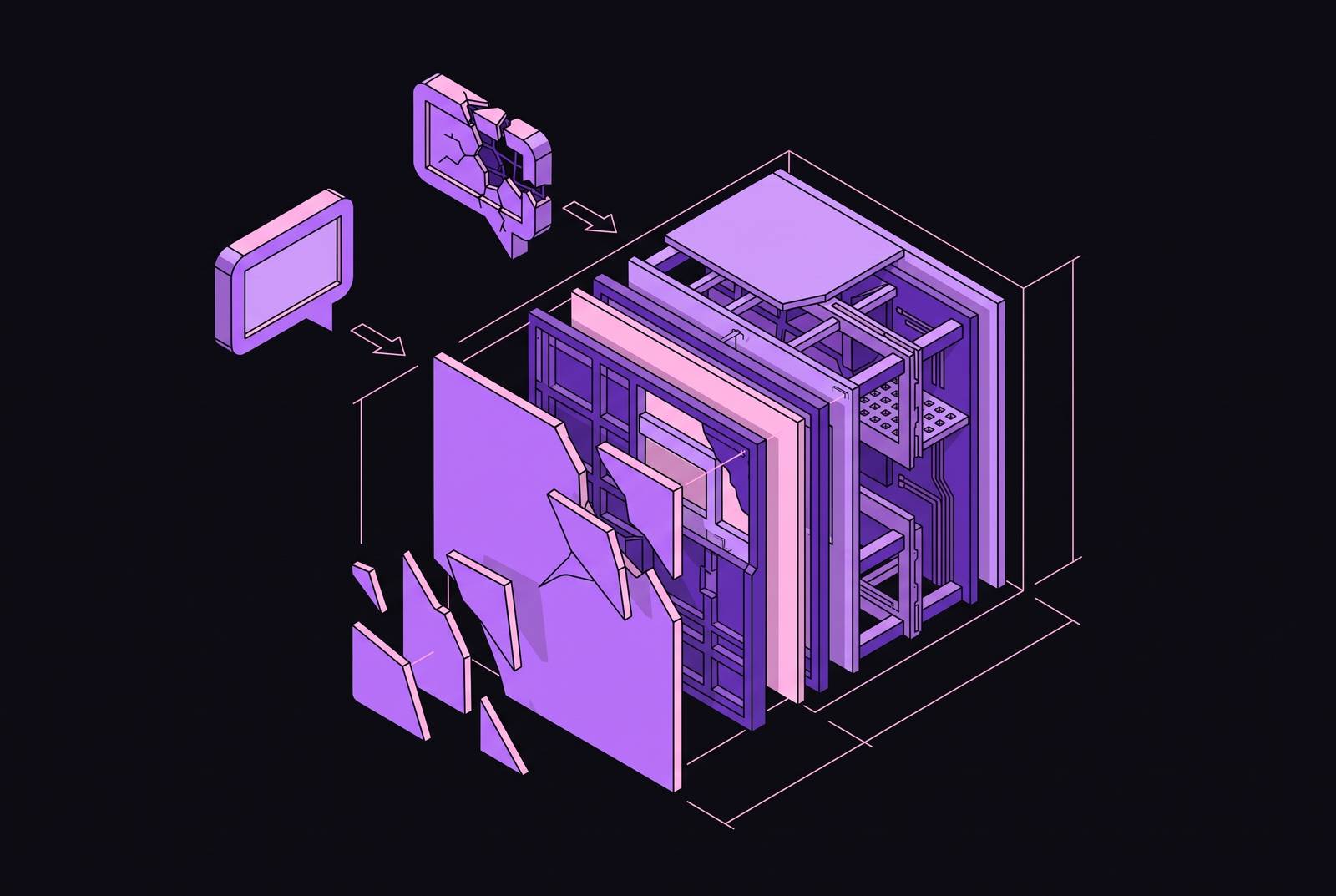
Persona collapse is a production reliability problem, but most engineering teams file it under UX or brand. That misclassification is the reason it goes unmonitored and unresolved: a drifting agent gets routed to a content team for a tone fix, while the underlying failure, invisible to every dashboard the engineering org actually watches, keeps running in production. If an agent stops sounding like itself, it is usually still returning successful status codes. It is still closing tickets. By every operational measure the team has instrumented, it is working.
The five mechanisms that cause persona collapse in multi-turn deployments
Persona collapse is a family of at least five distinct mechanisms, and each leaves a different signature in the trace data.
Context-window decay is the first and most structural. Persona gets injected at turn 1 through the system prompt, but as the conversation grows, token budgets force the system to truncate or summarize dialogue history. The persona signal set at the start dilutes with every subsequent turn, and the agent begins to wander off-character or contradict itself: a trait stated at turn 1 can be directly contradicted by turn 20. The Multi-Turn Rate metric measures exactly this: it tracks the fraction of multi-turn dialogs with at least one persona break or off-character response. This mechanism appears in traces as a slow, monotonic decline in adherence as turn count climbs. No single turn trips an alarm, because no single turn is the failure.
Session-resume failure is architecturally different. Conversation history survives when a session resumes, but the persona is not re-injected at the privileged system-prompt level the way it was at session start. A verbatim replay of that same conversation produced zero failures once persona was anchored continuously at the system-prompt level, confirming the collapse was architectural. This mechanism looks like a cold-start problem in the traces: the break appears precisely at session boundaries, not in the middle of an otherwise stable conversation.
Alignment pressure overriding persona constraints works differently, because it comes from how frontier models get trained. The classic surface form: a system prompt instructs the agent never to reveal it is an AI, and at turn 8 the agent produces something like "As an AI language model, I cannot give legal advice," breaking three constraints in one sentence, branding, the illusion of a human agent, and the scope limit on legal advice. These responses read as fluent and confident, which makes them harder for a human reviewer to catch than an incoherent or garbled output would be.
Memory compaction erasing pinned rules is a quieter failure with a precise, documented case. A fintech support agent running on Claude Sonnet 4.6 had to hold a formal tone and could disclose nothing about being an AI. The signature here is specific: failures cluster around a predictable turn depth and a single constraint class, not randomly across the conversation.
Brand voice collapse under load happens at the population level, not in any single conversation. Individual responses can pass a spot check, but across the whole population of conversations, the aggregate distribution of outputs narrows into a handful of repeated patterns. This kind of collapse is detectable in transcript review but stays invisible to CSAT scores for weeks.
What persona collapse breaks in a customer-facing deployment
Each of these five mechanisms breaks something different in the customer relationship, and the damage from any of them compounds the longer it runs undetected.
Context loss produces fabricated policy, and fabricated policy carries legal weight. In February 2024, the British Columbia Civil Resolution Tribunal decided the Air Canada chatbot case: if a chatbot invents a refund policy, that creates a legally binding expectation for the customer who received it. Air Canada argued the chatbot was a separate legal entity responsible for its own statements, and the tribunal rejected that defense outright, holding the airline responsible for what its chatbot told a customer just as it would be for anything printed on its own website. That ruling holds that an agent that has lost its grounding fills the gap with plausible-sounding language, logs the interaction as a success, and the company is on the hook for what it said.
Scope drift produces unauthorized commitments at scale. A customer-facing AI agent at a Series B fintech sent a message promising a promotional rate that did not exist to thousands of users in a single batch. Nothing about that agent's execution looked broken. The persona constraint it violated, that it was scoped to offer only currently active rates, broke silently and without complaint from any system watching it.
Escalation failures hit CSAT harder than almost anything else practitioners track. The customer has to repeat everything, the human agent starts cold, and CSAT collapses at exactly the handoff point where the customer expected continuity. This is a persona-continuity failure as much as a technical one: the agent's accumulated, persona-shaped understanding of the problem simply does not travel with the handoff.
Brand voice collapse erodes trust on a longer timeline. Customers do not file complaints when the response in front of them is grammatically correct and superficially helpful, even if it is generic. The cost arrives later, in delayed CSAT surveys and in churn that occurs weeks after the voice collapsed. That gap between cause and visible effect is temporal.
Multi-turn conversations are where all of this concentrates. Persona collapse does the most damage exactly where agents are most needed and where the customer has already invested the most effort explaining their problem.
Why standard monitoring cannot see persona collapse
Standard error monitoring evaluates execution, confirming an agent produced a response, not whether that response complied with the agent's declared identity and policy scope. That distinction is the whole reason persona collapse survives undetected inside systems that otherwise look well-instrumented.
Conventional monitoring is built around a binary pass or fail. The same input can trigger a different tool sequence on two separate runs, and an output can look structurally correct even when it is semantically wrong in exactly the ways described above. Step-level tracing, not a pass or fail health check, is the minimum signal needed for an agent running in production. Persona drift is a content event, and an SRE has nothing to alert on unless persona adherence is actually scored and attached to the trace itself.
No standard metric catches most of what actually goes wrong. Empirical work on production agent failures found that no standard metric detects more than two of seven documented failure modes. The accuracy number said nothing was wrong while the underlying behavior was degrading in real time, which is the measurement equivalent of the silent success signal running one layer up.
Human observation ends up doing the job monitoring was supposed to do, and it does that job poorly. The longest-lived failures sat in the seams between components, in the places no automated test ever runs. Most customers who hit an off-persona response do not file a complaint about it. They quietly lose trust and leave. Waiting for a user to notice is a sampling strategy with very low recall, not a monitoring strategy.
Per-trace review cannot see collapse that only exists at the population level. Standard per-agent evaluation checks individual traces, so an individual response can pass a spot check cleanly even after the aggregate distribution of everything the agent produces has narrowed into a generic, repetitive band. Brand voice collapse under load is the practical form this takes: no single response trips an alert, but the ensemble of responses has drifted.
Periodic transcript review is the honest objection to all of this, and it deserves a direct answer. Audits of this kind are valuable for blocking a regression from shipping twice, but they have close to zero value for catching the first occurrence before it reaches a customer: the failure has already happened by the time the review finds it.
What production monitoring must score to catch persona collapse
Catching persona collapse before a customer does requires scoring every trace against what the agent was supposed to do, not just logging what it did. That is a different instrument than error monitoring, and it has to operate at the level of individual constraints, not at the level of the whole response.
Persona should be treated as a constraint set, not a single block of prompt text. A real persona contract bundles identity rules such as "reply as Alex, never as an AI," tone rules such as "formal, no slang," scope rules such as "only billing topics," refusal rules such as "never give legal advice," and cross-turn consistency requirements that span the whole conversation. Each of those is a separately scorable constraint class. Monitoring that treats the system prompt as an undifferentiated blob can flag gross, obvious deviation at best. It cannot tell an engineer which specific rule broke.
Scoring has to run span by span against that contract, not just against conversation-level summaries. Prompt adherence evaluation checks whether each individual response obeys the constraints set out in the system prompt, including the persona-specific ones, and it works on individual trace spans, not conversation summaries. This is precisely the instrument that would have caught the fintech compaction failure described earlier: the AI-disclosure constraint being dropped at a predictable turn depth was visible in span-level data well before any disclosure reached a customer. Cross-turn consistency scoring catches a related but different problem: an agent that was formal at turn 1 and casual by turn 12 can pass both individual span checks cleanly while still failing the consistency check that spans the two.
Turn-depth analysis turns a detected failure into a diagnosis. Slicing the persona break rate by turn count is a structural signal in itself: failures clustering at turns 5 through 8 point to memory compaction as the mechanism, while failures clustering at session boundaries point to session-resume failure instead. Different clustering patterns point to different fixes, so if a monitoring layer aggregates across turns, it throws away the diagnostic information you need to locate the root cause.
Population-level diversity monitoring catches what per-trace scoring structurally cannot. Tracking the spread of responses across a cohort of conversations reveals brand voice collapse while it is still forming, because a narrowing distribution is the early signal of an agent sliding into generic-mode drift. You stop asking whether any single response passed and start asking whether the population of responses this agent is generating has shifted toward a narrow, generic mode.
Detection has to happen online, on live traces, not only in offline batch review after the fact. Offline evaluation finds regressions after they have already been deployed. Online evaluation, scoring traces as they arrive, closes the gap between when a failure starts and when someone notices it. Incident latency in production silent failures ranged from 13 hours to 60 days, and online scoring compresses that window toward its short end. The target architecture scores every trace against the persona constraints at the moment it is captured, groups failures by constraint class and turn depth, and surfaces alerts into the team's existing workflow, a Slack channel, for instance, rather than requiring a separate console nobody checks.
Persona constraints have to be re-evaluated after every model swap and every prompt change, because the same text can behave differently against a new model version.
How the monitoring layer fits into the team's workflow
Monitoring for persona collapse earns its keep when it surfaces failures inside the workflow engineers already use to fix things. If a separate console demands a dedicated triage session, it gets checked quarterly at best, but failures that compound across every session they go unaddressed need a faster cadence than that.
The team that shipped the agent is the team that has to fix the drift. Alerts, grouped failure patterns, and root-cause context need to land in the tools that team already has open, not in a dashboard visited on a separate schedule.
Volume makes grouping a requirement. The monitoring layer has to cluster deviations into actionable issue groups automatically, so an engineer sees something like "17 conversations broke the no-AI-disclosure constraint at turns 5 through 8" instead of 17 separate, disconnected alerts demanding individual attention.
Teams should not have to predict every way their agent can fail before they ship it. The persona contract, the agent's own declared instructions, is the correct baseline for the audit. If a team has to enumerate every possible failure mode in advance, the monitoring will always be incomplete, because production use exposes novel collapse patterns that nobody anticipated during QA. Auditing every trace against the agent's own declared contract and surfacing deviations automatically catches the failure modes a team did not know to look for.
Framework compatibility functions as a prerequisite for adoption, not a feature that differentiates one tool from another. Teams are already running their agents on specific frameworks, and a monitoring layer that demands migration or heavy instrumentation work will not be in place in time to catch the first wave of production failures it was meant to stop.
Data handling has to meet a baseline before any of this matters. Customer-facing agent traces contain conversation content, signals about user intent, and sometimes sensitive policy-decision context. If a platform handles that data, it needs to meet SOC 2 compliance and maintain proper data isolation as a baseline condition of deployment, not as an optional upgrade layered on top later.
Sources
- Evaluation Blindness: How Silent Measurement Failures Corrupt AI Systems from Training to Deployment
- The Chameleon's Limit: Investigating Persona Collapse and Homogenization in Large Language Models
- Silent Failure in LLM Agent Systems: The Entropy Principle and the Inevitable Disorder of Autonomous Agents