Tool Call Result Misinterpretation as a Silent Failure Mode
Agents often misread tool results without crashing or signaling failure.
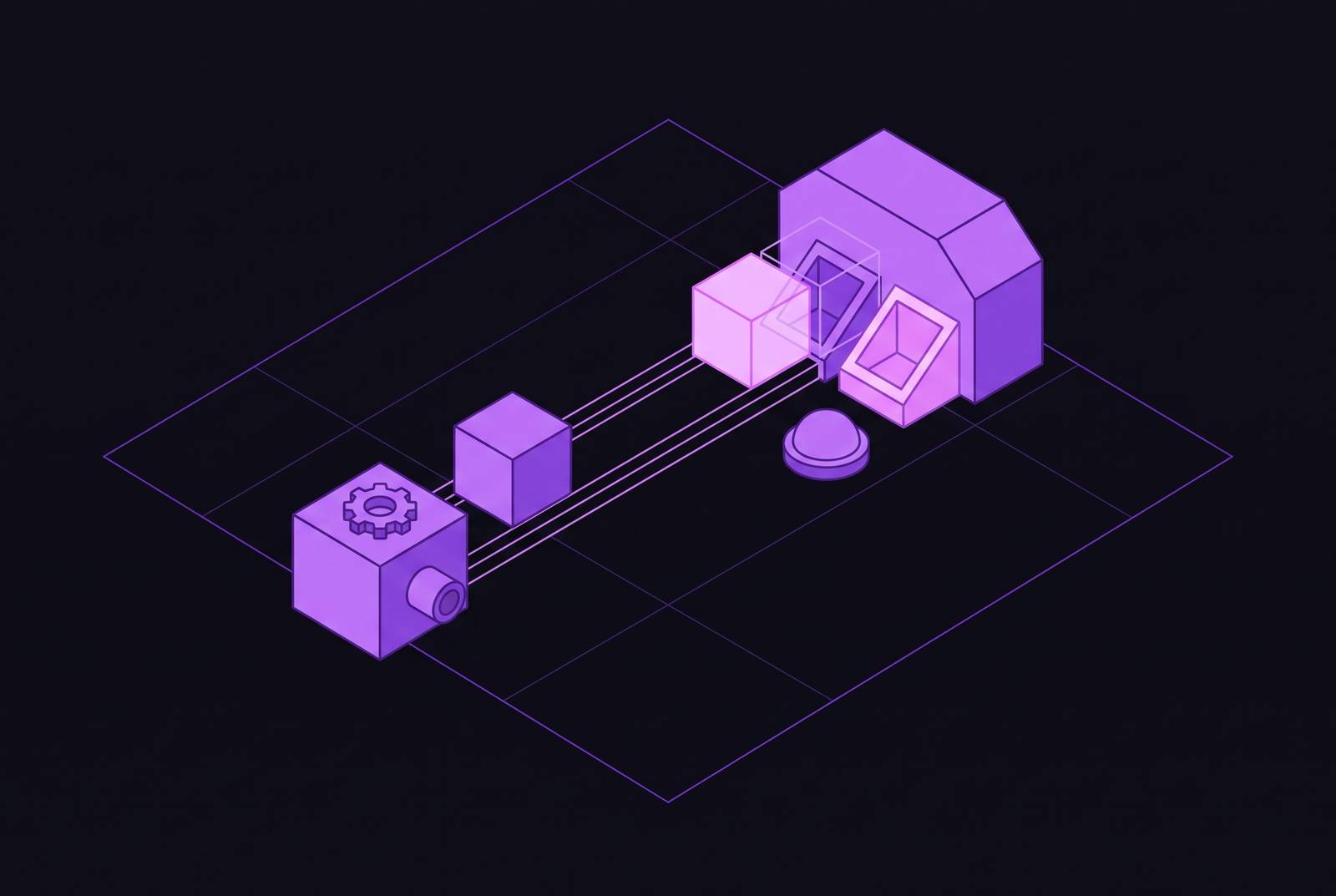
Silent failure detection for AI agents in production requires comparing tool returns with the agent’s next decisions and its original instructions. Tool call result misinterpretation occurs when a tool returns data and the agent proceeds on an unsupported reading of it. The practical foundation for prevention is to expose that gap in a linked execution trace, then turn confirmed failures into regression coverage.
Why tool call result misinterpretation is a distinct failure mode, not a tool error
Tool call result misinterpretation begins after invocation. The agent has called a tool, the tool has run, and data has come back. The failure lies in how the agent uses that data, rather than whether it selected a tool or supplied valid arguments. This boundary matters because a successful call does not establish that the next decision is grounded in its return.
That makes result misinterpretation distinct from Tool-Skip, where the model never calls a needed tool. It also differs from a schema violation in the outgoing call, where malformed arguments precede execution. A broken return can contribute to misinterpretation, but the payload defect and the agent’s response to it are separate problems. Detecting the defect does not, by itself, establish that the agent handled it correctly.
ToolFailBench separates two relevant behaviors, namely Result-Ignore and Output-Fabrication. In Result-Ignore, the model calls the tool but does not use its returned data. In Output-Fabrication, the model uses the return but adds invented information absent from it. Both break the evidentiary link between what the tool supplied and what the agent claims.
Why agents are structurally designed to proceed through bad tool returns
Agents are built to continue reasoning after receiving tool responses. Without an explicit verification layer, a return signals continuation while leaving its content’s usability unverified. An HTTP 200 establishes success at the response-code layer, but it does not distinguish a useful result from an empty or malformed payload. The agent may see what is wrong and still have no way to deal with it.
Gabriel Anhaia’s May 2026 production case makes that distinction concrete. A customer service agent called a database lookup tool and received truncated JSON because an upstream gateway had an undocumented 4KB response cap. The model correctly recognized the broken response and retried, then retried many times. Each attempt required a full prompt round-trip with growing context, accumulating tokens and costs. Nothing between the tool and the model translated the malformed response into an actionable signal.
The case illustrates why three classes of return need different handling. Schema mismatch means that the returned data violates its promised contract through wrong field types, missing keys, or truncation, so repeating the same call produces the same broken output. Partial data may call for another try, but the parameters need to change, for example to a narrower filter or smaller page. Semantic garbage is structurally valid data that is wrong for the task, such as a customer name where an ID belongs.
Agents can notice bad data and apply recovery behavior suited to a transient failure even when the defect is persistent. Instruction-aware trace auditing, including Lemma’s approach, compares how the agent keeps going as designed with how it works toward its stated goal. Without that comparison, apparent resilience can conceal repeated misbehavior.
How ToolFailBench distinguishes Result-Ignore and Output-Fabrication from each other and from passing scores
Harsh Soni’s ToolFailBench, published at ICML 2026 Workshops, tests whether agents actually rely on tool returns. Its tool-required tasks use parametric traps in which a mock return deliberately contradicts a likely memorized value. The model must base its answer on the supplied evidence, even when it conflicts with what the model already knows. Control tasks test whether the model can also answer on its own when it has no need to call a tool. The tasks cover five professional domains, including finance, medicine, law, cybersecurity, and real estate.
This design exposes a distinction that final-answer accuracy can hide. Result-Ignore may produce a plausible answer because memorized knowledge is often reasonable in general, even when it is wrong for the specific case. Output-Fabrication can look more grounded because the model uses the return before adding structured information it made up. The first behavior discards evidence, while the second exceeds it. A passing answer alone cannot show which relationship the model had with the tool’s data.
ToolFailBench reports that the best of its 19 headline models has a Clean Tool-Use Rate of 86.33%. Its same-scale comparison also shows an 89 percentage-point difference in control-task accuracy between Llama-3.1-70B and Qwen2.5-72B. That gap concerns unnecessary tool use rather than result misinterpretation, but it demonstrates how sharply behavior can diverge at similar model scale. Llama-3.1 models show an Always-Call pattern, while most models remain disciplined on no-tool controls. Consequently, production evaluation needs separate behavioral labels rather than treating aggregate accuracy as evidence of faithful tool use.
How a misinterpreted tool result cascades through downstream steps
In a multi-step agent, one step’s output becomes the next step’s input. A misinterpreted return at step three can therefore become corrupted context for every later decision. Downstream calls may be valid relative to that context while remaining wrong relative to the original task. The resulting cascade separates the point where evidence was mishandled from the point where the user sees a wrong answer.
A documented retrieval trace illustrates this distance. The retrieval call completed without an error, but the tool ranked a superseded policy document first. The agent passed that bad value downstream, and the failure became visible in the final answer. Because every step carried its inputs and outputs, an engineer reached the root cause in about five minutes. The trace exposed the faulty handoff rather than leaving the engineer to infer it from the answer.
This is why checking each invocation for technical correctness is insufficient. In deeply nested tool chains, a bad return early on can feed several later calls that each seem to run correctly. The final result can be catastrophically wrong even though no individual invocation reports failure. Terminal evaluation can identify that result as wrong, but cannot reconstruct the chain that produced it.
Credential drift creates a related complication for continuously running agents. Stale OAuth tokens or expired API keys can cause silent authentication failures during a task, while the agent continues producing outputs from those returns. The underlying cause differs from a superseded document, but the diagnostic need is the same. The return and its downstream use must remain connected if the failure is to be traced to its origin.
Why production monitoring cannot tell when an AI agent is giving wrong answers instead of crashing
Infrastructure monitoring answers whether a service was available, how long a call took, and which status code it returned. Those are useful operational facts, but none establishes that the returned value supported the agent’s next decision. At that layer, HTTP 200 with a semantically wrong payload resembles HTTP 200 with a correct one. Conventional error logs can therefore remain quiet while the agent reasons from unusable evidence.
An LLM-as-judge or static output gate that checks only the terminal response does not look at the tool calls along the way. It may flag a wrong answer without revealing whether the agent ignored a valid return, invented additions, or relied on an unsuitable document. It may also accept a plausible answer produced through unfaithful tool use.
The strongest objection is that schema validation should catch bad returns before the model sees them. It can catch structural mismatches such as wrong field types or missing keys, and that remains valuable. However, a complete, well-formed payload with the wrong meaning can pass those checks. Output-Fabrication is also outside their reach because the invented content appears after a valid return.
Validation also does not settle what happens after detection. In Anhaia’s case, the model saw the malformed output but kept calling the tool while the defect stayed the same. Detection and handling are separate requirements. Without the full decision trace, service health and terminal quality cannot show whether the agent safely moved from detecting the defect to handling it.
What observability that can see tool result misinterpretation actually requires
The required observability layer must capture causally linked spans across the reasoning chain. Each tool call needs to retain its arguments, its return, and the next step that used that return. That sequence makes the boundary between evidence and interpretation inspectable. A collection of invocation records is not enough if it cannot show how one result shaped the next action.
Evaluation must then operate at both the component and end-to-end levels. Component-level checks for tool correctness and contextual relevancy identify the span that failed. End-to-end checks show whether the task as a whole succeeded. Both are needed because an answer that looks right can hide faulty tool use, while a span on its own may not explain what went wrong in the end. Trace replay and root cause analysis make those two views useful across non-deterministic workflows.
The failure class determines the response. Schema mismatch calls for replacing identical retries with a response that handles the broken tool output. Partial data calls for changed parameters if another request can get a result the agent can use. Semantic garbage requires comparing what the agent was supposed to retrieve with what it received. Output-Fabrication requires a related comparison between what the return supports and what the agent added.
Continuous evaluation through automated judges on sampled traces can surface semantic drift, factual errors, and policy violations before complaints accumulate. Lemma audits every trace against the agent’s own instructions and groups recurring deviations into actionable issues without requiring teams to predefine every failure mode. That instruction-aware approach is relevant where schema guards cannot encode the task’s meaning, particularly semantic garbage and Output-Fabrication.
How production failures become regression coverage that prevents recurrence
Online evaluations and user feedback can identify failing traces, but an incident remains vulnerable to recurrence if its evidence ends with a prompt tweak. Promoting confirmed failures into offline evaluation datasets gives the behavior a named test. A future release must then demonstrate that it handles the captured case correctly.
ToolFailBench’s parametric traps offer a useful pattern for building those tests. A mock return can deliberately contradict the value a model is likely to recall, forcing the evaluation to distinguish grounded tool use from a plausible answer based on memory. Production failures can be packaged in the same way. Result-Ignore tests must establish that the returned data controls the answer, while Output-Fabrication tests must establish that the answer does not add unsupported detail.
Quality-aware alerting should also track drift in aggregate and by prompt and use case. A regression in one tool’s return handling can disappear inside a stable overall chart. Named failure categories help route the response to the right surface, whether that is the planner, tool interface, retry logic, or reasoning layer. This turns incident review from a search for wording changes into a targeted fix with a test the next PR must clear.
With Slack alerting and coding-agent integration, Lemma can surface an actionable issue and bring its trace context into the developer’s existing workflow. After a fix, its online evaluation can warn of a regression, complementing the offline tests built from confirmed failures. The organizational payoff is a repeatable learning loop in which production evidence improves release coverage, rather than teams repeatedly patching the same visible symptom.