Constraint Violation Patterns Across LangGraph Agents
Undetected state mutations in LangGraph agents silently corrupt control flow and resource budgets.
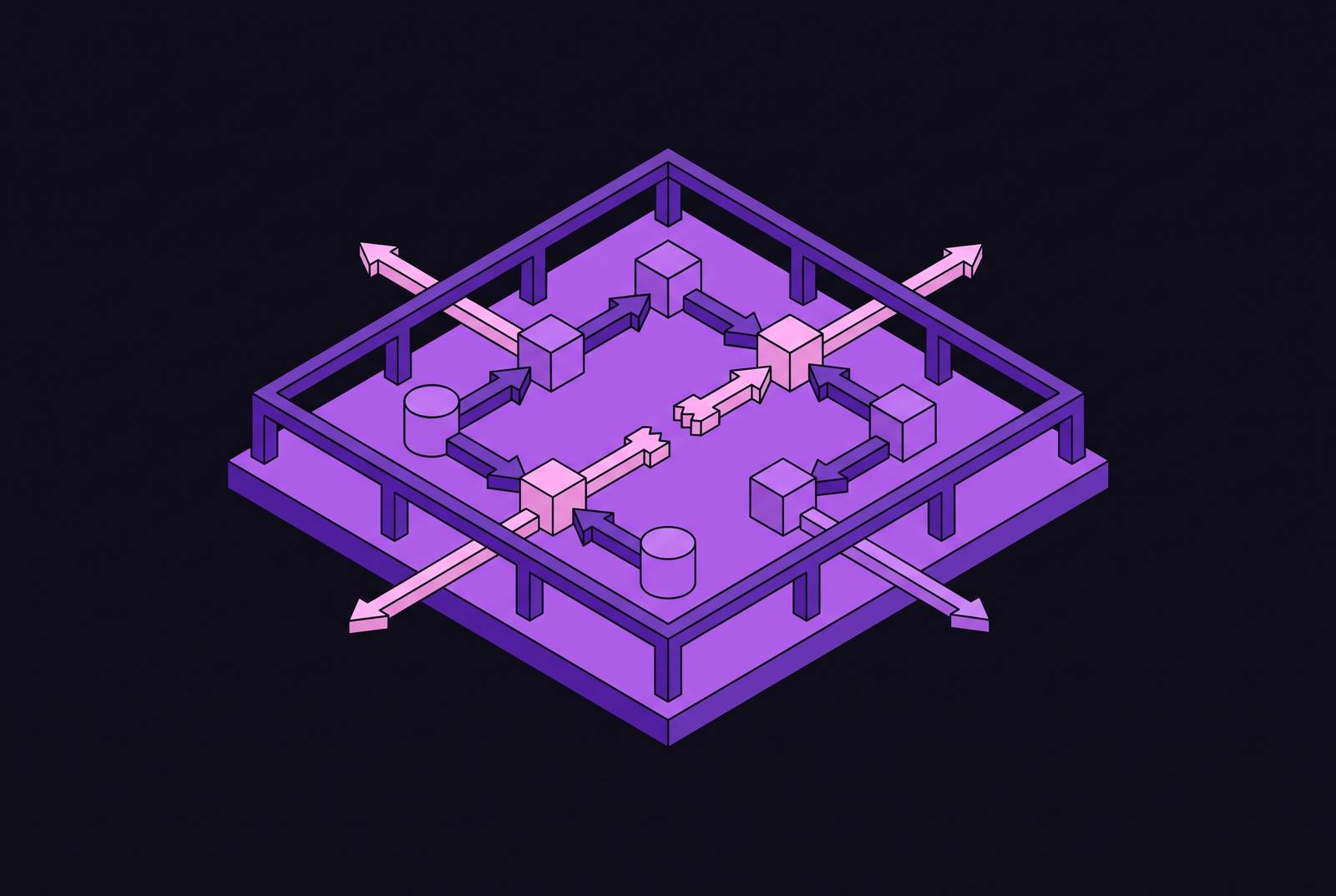
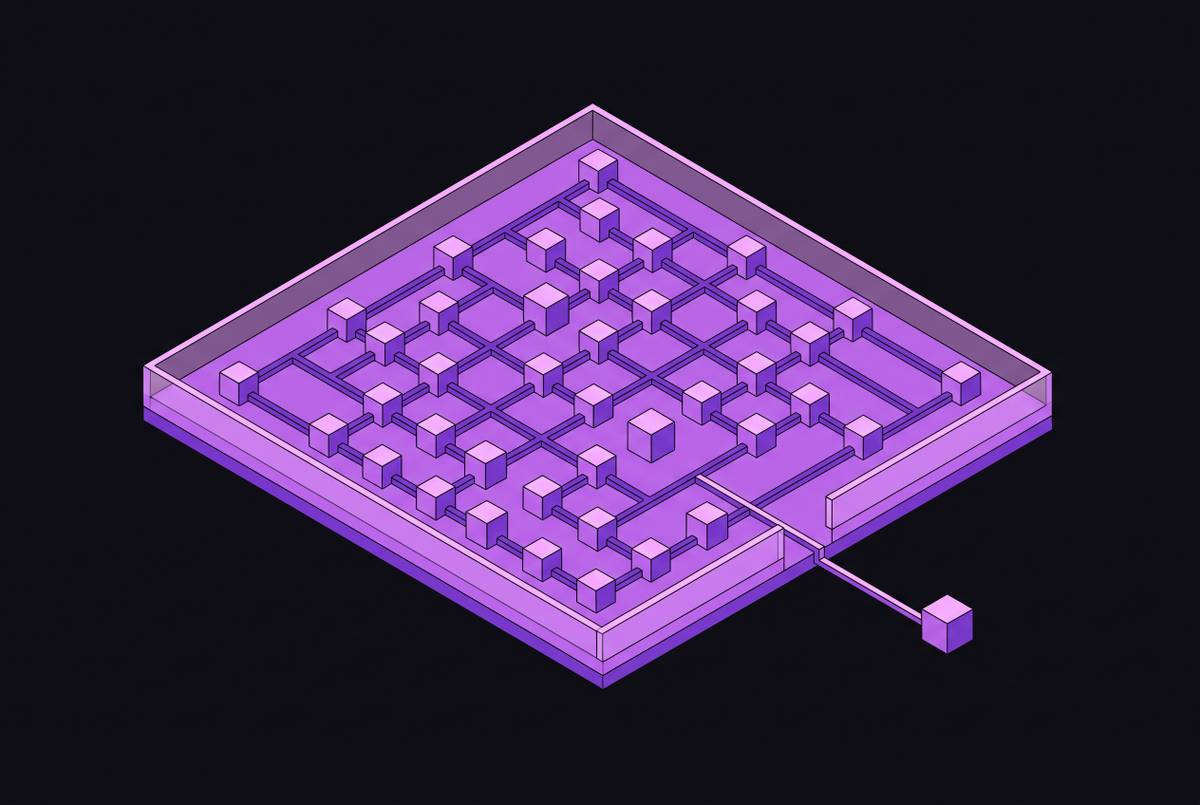
LangGraph builds agents as state machines, not as chains of prompts, and that choice is what lets failure hide in plain sight. Picture an agent that scores well on every task-completion benchmark while its cost per query quietly doubles: a router keeps sending every date-mentioning input down the expensive branch, and two nodes upstream, a reducer has already overwritten a budget constraint the planner set earlier in the run. Nothing throws an exception. No log line flags an anomaly. The graph finishes, the answer looks right, and the damage sits buried in state that nobody inspected at the transition level. That is the shape of a LangGraph constraint violation, and it is a direct consequence of the primitives the framework is built from: typed channels, conditional edges, retry loops, sub-graphs, parallel fan-in, and a checkpointer that snapshots state at every step.
LangGraph's structural primitives and the constraint violations they produce without crashing
State in a LangGraph agent is the single record every node reads and writes against, and that design is precisely what makes a bad write so dangerous. A traditional program crashes when it hits bad data because something downstream expects a type or a value that never comes. A LangGraph agent has no such tripwire built in: state is just a dictionary of typed channels, and as long as the shape of the data matches what the schema allows, a wrong value flows forward exactly like a right one. A violation written into state at one transition gets carried into every downstream node without complaint, the graph keeps executing, and the final output can still look coherent. The model's reasoning is not the point of failure here. The graph's mechanics are, and any taxonomy of these failures has to start from how LangGraph moves state, not from how the underlying LLM reasons.
How reducer misconfiguration silently corrupts state across nodes
The most common member of this taxonomy is the reducer bug, a deterministic structural failure rooted in the graph's schema. LangGraph channels use reducers to decide how a new write combines with existing state: add_messages appends to a running list, while a plain field without a reducer follows last-write-wins semantics, where the newest value simply replaces the old one. Developers often expect accumulation when the schema is actually configured for overwrite, and that gap between the two assumptions is the violation itself, sitting in the type annotation long before any run exposes it.
Take a ticket-classification graph where category is a last-write-wins field. If two passes through the classifier run, the second pass silently discards the first pass's result, and the draft-reply node downstream acts on a category that may no longer reflect the ticket's original classification intent. Nothing about that failure announces itself. The field holds a valid-looking value at every point in the run, so there's no error to catch and no obvious place to look.
Parallel fan-in graphs produce a related but distinct failure. Two worker nodes write to the same state key at roughly the same time, those writes collide at the merge point, and one is dropped. The value that survives looks entirely normal, so no downstream node has any way to detect that a competing write ever existed. In both cases, the corruption is state management working as configured, just not as intended.
What conditional edges do when routing goes wrong
Reducers corrupt data. Conditional edges corrupt control flow, and that distinction marks the second axis of the taxonomy. A conditional edge violation happens when the router, given the current state, sends execution down the wrong branch, and because that branch can still generate a plausible-sounding output, the defect is invisible to any evaluation that only checks the final message. The routing function itself is simple: it reads state and returns the name of the next node. But if the state it reads has already been corrupted, by a reducer violation earlier in the graph, for instance, the routing decision inherits and compounds that earlier error.
A multi-agent supervisor architecture produces a concrete version of this. A supervisor routes an incoming task to a specialist agent, which defers the work back, reasoning that the task belongs to someone else ("this is a math question"). The supervisor then routes to a second specialist, who also defers, and the graph cycles between agents until it hits its recursion limit and halts. That terminal state is not a constraint violation in the strict sense that a bad value was written, but the agent has burned through its resource budget and produced nothing, all while each individual hop looked like correct execution.
A second routing failure class appears when a router tuned for one distribution of state meets state it was never built to handle, such as a date field that silently changes which branch gets taken. In that case, the expensive branch doesn't fire once by accident; it fires systematically across an entire class of inputs that happen to share the triggering value, and the cost compounds quietly across every one of them.
Retry loops and constraint violations
Retry loops add a time dimension to this taxonomy, and they exist to solve a real problem: tool calls fail transiently, networks blip, and a single retry often resolves the issue cleanly. That's the scope they're built for, and within that scope, they work. The trouble starts when a retry loop exhausts its attempt limit without success. At that point the graph does not crash. It either passes along whatever the last failed attempt produced, or worse, lets the model fill the gap with a plausible-sounding answer that was never grounded in any real tool response.
The fabrication path runs like this: a search tool fails across its retries, the model generates a plausible answer anyway, that answer gets written into state as though it were a verified tool result, and every node downstream treats it as fact. Trace-level analysis has captured this pattern directly: a retry loop fired three times before the search tool gave up, the model fabricated an answer, and the final message reported that fabricated answer cleanly enough that the answer-level score passed, even though the state machine underneath it had already broken.
A second retry-loop violation drives up cost. A tool that finally succeeds on its fifth attempt still returns a correct answer, but that answer now costs five times what a single successful call would have cost. Nothing about the run signals this. There's no failure, no retry-budget alert, just a quietly inflated bill sitting in a state machine that looks, from the outside, like it worked exactly as designed.
How sub-graph handoffs create violations at the parent-child boundary
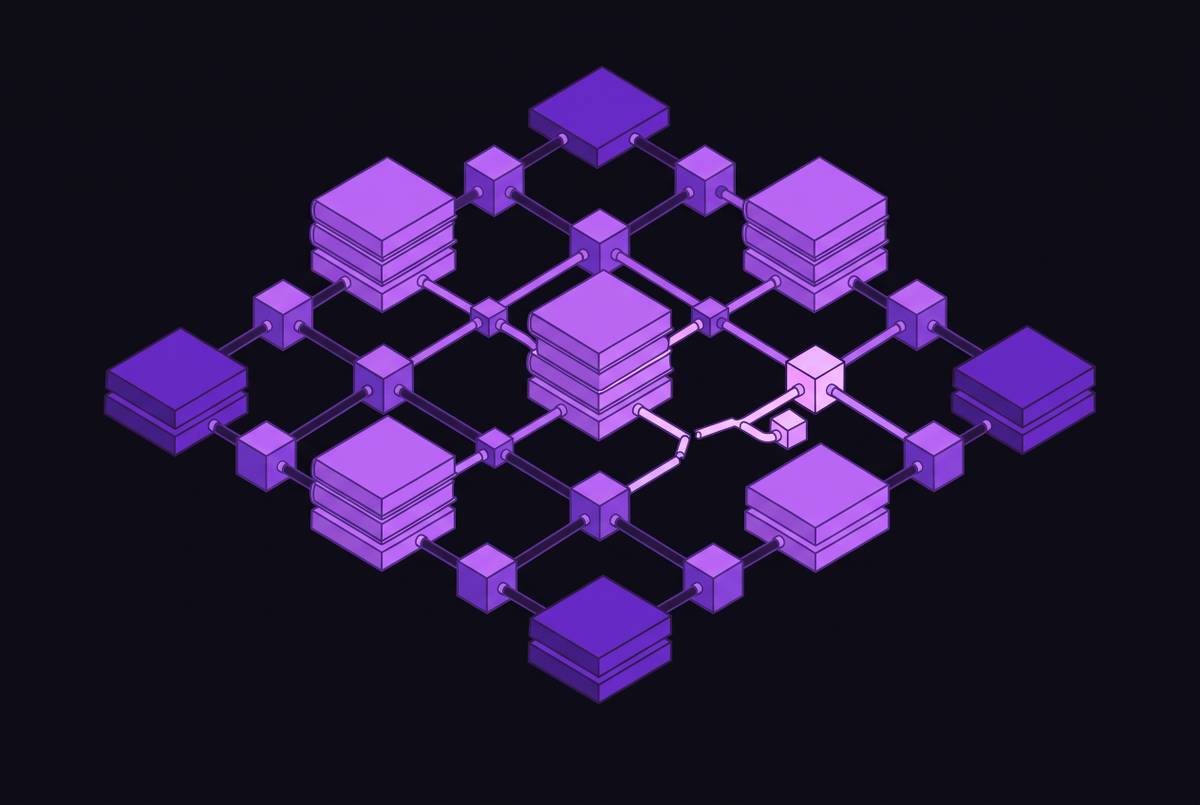
LangGraph lets a node in a parent graph be, itself, a fully compiled sub-graph, so that composition introduces a boundary where violations can originate independent of any single node or loop. The parent passes state into the sub-graph, the sub-graph executes against its own schema, and what comes back may not match what the parent's reducers and downstream nodes were built to expect. Without schema enforcement at that boundary, a mismatch enters state and nobody notices.
This matches the untyped state mutation failure mode documented in production multi-agent systems: one agent expects a JSON object carrying a confidence score, a second agent returns a markdown string instead, and the parent graph's reducer accepts that string without complaint because nothing at the boundary checks the shape of what arrives.
A second sub-graph violation class is subtler still, because the sub-graph does nothing wrong by its own contract. The parent's planner sets a budget constraint several nodes before the sub-graph runs, the sub-graph's own reducer overwrites that field as part of its ordinary operation, and the parent resumes execution with the constraint simply gone. A study of hierarchical multi-agent planning systems documented exactly this pattern: budget violations were the dominant failure mode, with early-stage agents allocating resources aggressively and leaving later stages without enough budget to complete their work as intended. The parent-child boundary is where resource constraints go missing most often, precisely because no single agent in the hierarchy owns responsibility for the constraint across the full run.
Sub-graph handoff violations are the hardest in the taxonomy to detect, because the failure site, the boundary itself, sits spatially distant from the symptom site, which is usually a downstream node in the parent graph several steps later. Generic tracers make this worse by instrumenting LangGraph as if it were a simple chain: nodes appear as opaque spans, conditional edges disappear from the trace entirely, and state diffs get dropped, so there's no record connecting the symptom back to the boundary that caused it.
How violations compound across structural layers
None of these four violation classes stays contained to its own layer. A reducer violation corrupts a single state field; a conditional edge reads that corrupted field and takes the wrong branch; the wrong branch enters a retry loop that exhausts its attempts and writes fabricated content into state; then that fabricated content gets handed to a sub-graph that processes it as verified fact. Each layer doesn't just pass the violation along; it multiplies it, because it adds its own failure mode on top of whatever arrived already broken.
This compounding persists specifically because LangGraph's checkpointer does its job well. The same persistence mechanism that lets a crashed run recover cleanly also preserves every corrupted state it's ever handed, extending a violation's lifetime across thread boundaries and across session restarts rather than letting it die with the run that created it. A PostgreSQL-backed checkpointer writes state at every super-step boundary, so a violation committed at node three is stored durably and will be read by every node that follows, including nodes in future invocations of that same thread, long after the original run has ended.
The clearest documented evidence of this comes from a production personal-assistant runtime defended by thousands of unit tests and declarative governance checks, which still produced a documented series of incidents with full root-cause postmortems across eight weeks. The longest-lived failures lived in the seams between components, exactly the boundaries where sub-graph handoffs and reducer misconfigurations interact, because no test in that suite ran at those seams specifically.
Multi-agent systems have their own name for the terminal case of this compounding: the "Infinite Debate" failure mode, where two agents loop endlessly because each one's correction introduces a fresh defect for the other to react to. A routing violation sends a task to the wrong specialist, that specialist's output triggers a retry, the retry's result violates a constraint the other agent was holding, the graph re-routes again, and the cycle never terminates on its own. It is the clearest demonstration that these four violation classes are not independent failure modes sitting side by side. They are a system, and understanding how they interact is what turns the taxonomy from a list into something a team can actually use.
Why trace-level analysis can see these violations
Message-level evaluation shares one blind spot across all four violation classes: a final answer that reads as correct averages over everything the state machine did to produce it. That kind of scoring moves only when a graph fails catastrophically and stays flat while the underlying state quietly degrades, which is how an agent can keep passing task-completion benchmarks while its cost per query doubles behind the scenes. The four failure classes that message-level evaluation structurally cannot see map directly onto the taxonomy built here: conditional edges produce routing violations, typed channels produce reducer violations, sub-graphs produce handoff violations, and retry loops produce fabrication-from-exhaustion violations.
Generic tracing tools make the blind spot worse. Built to instrument LangGraph as though it were a simple chain, they render nodes as opaque spans, drop conditional edge transitions from the record entirely, discard state diffs, and leave the checkpointer invisible to whoever is reading the trace. What a team gets from that kind of tracing is confirmation that something happened at a given node, with no record of what state went in, what state came out, or which branch of the graph actually ran.
Trace-level analysis closes that gap by scoring the transition itself rather than the final message: the four-tuple of state before the node ran, the node itself, state after it ran, and the edge taken to leave it. Each violation class leaves its own signature in that four-tuple. A reducer overwrite appears in the trace as a state diff that removes data that had previously accumulated. A routing violation appears in the trace as an edge taken that doesn't match what the state actually called for. A retry fabrication shows up as a successful tool result sitting next to a retry timeline with no successful tool call in it. A sub-graph boundary violation appears in the trace as a schema mismatch between what the parent expected as input and what the sub-graph actually returned.
What makes this detectable in practice, rather than just in theory, is LangGraph's own checkpoint-replay capability. Replaying from a checkpoint turns a flaky production incident into a deterministic regression that a team can reproduce and run repeatedly until the cause is fixed.
A detection framework tied to each structural primitive
Each of the four structural primitives leaves a signal that is visible only at the transition level, and matching the right signal to the right primitive is what makes this taxonomy something a team can act on rather than just a way of naming problems after the fact. For reducers, the signal is a state diff at a given node that removes previously accumulated data, which flags a last-write-wins field behaving exactly as configured, contrary to what was assumed. For conditional edges, the signal is an edge taken that doesn't match what the incoming state would predict, which flags a routing decision made on corrupted or unexpected input. For retry loops, the signal is a successful tool result in state with no corresponding successful call anywhere in that node's retry timeline, which flags fabrication filling in for a tool that never actually succeeded. For sub-graphs, the signal is a schema mismatch between what the parent graph expected to receive at the handoff and what the sub-graph actually returned, which flags a boundary that let an incompatible shape of data through unchecked.
None of these four signals require guessing at what the model was thinking or re-running an agent dozens of times to catch an intermittent bug. They require inspecting the same four-tuple, state before, node, state after, edge taken, at every transition in the graph, and checking each one against the specific signature its structural primitive produces when misconfigured. That is the practical payoff of treating LangGraph's constraint violations as a taxonomy tied to graph mechanics rather than as a grab bag of unrelated bugs: each primitive fails in its own recognizable way, and once a team knows what that failure looks like in the trace, it stops being invisible.